You Are…
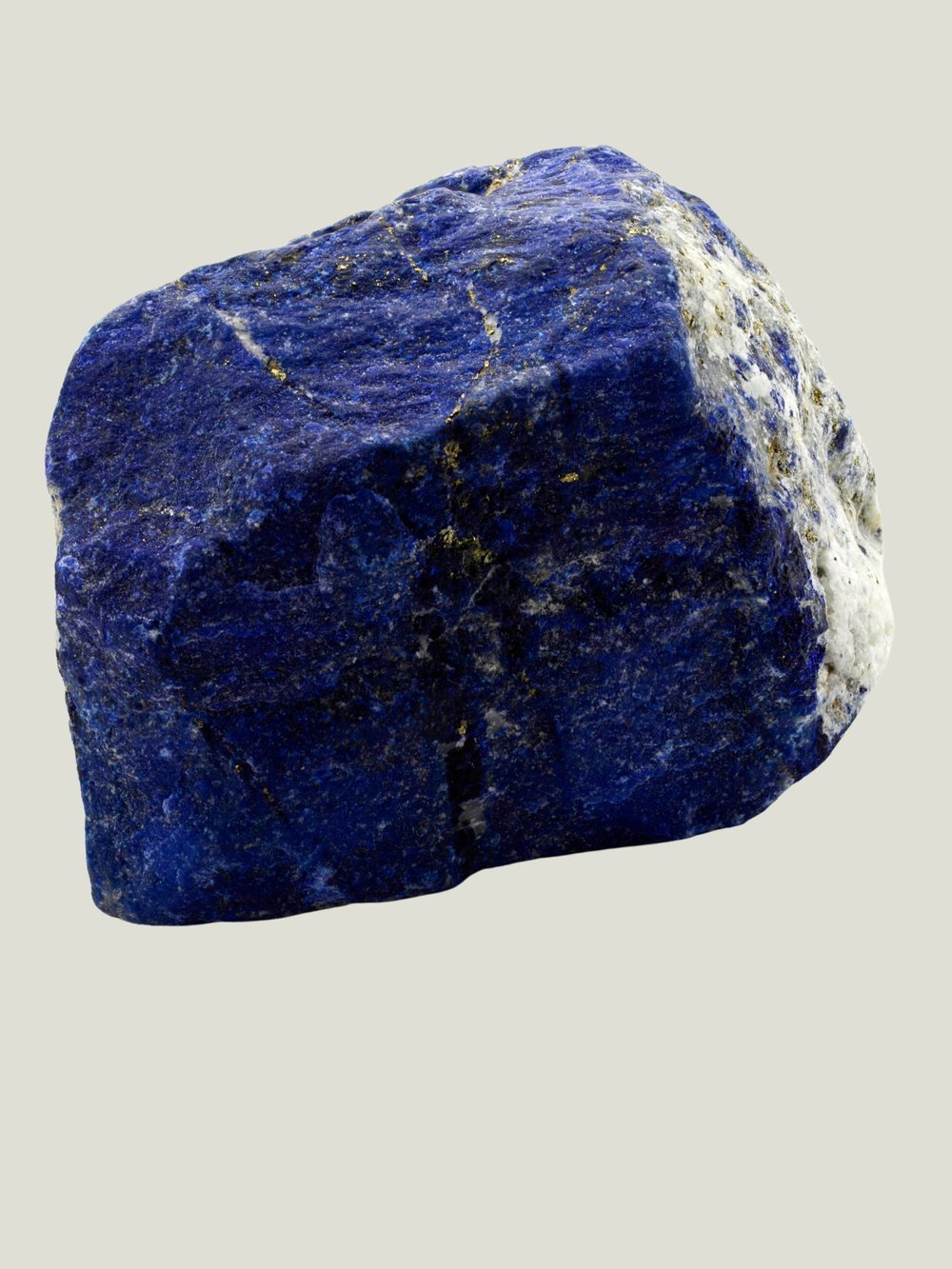
Lapis
Lapis lazuli, with its deep blue color and striking golden flecks, is one of the most revered gemstones in history. Prized for its beauty and spiritual significance, lapis lazuli has been used for thousands of years in jewelry, art, and decoration. Often associated with wisdom, truth, and enlightenment, this captivating stone continues to hold a special place in the hearts of many.
Lapis lazuli is a metamorphic rock primarily composed of lazurite, which gives it its vibrant blue color. The stone also contains calcite, pyrite (often referred to as "fool's gold"), and other minerals, contributing to its unique appearance. The striking golden pyrite flecks against the rich blue background create a mesmerizing effect, making each piece of lapis lazuli distinct.
Originating from the mountains of Afghanistan, lapis lazuli has also been found in locations such as Chile, Russia, and the United States. The gemstone is typically opaque, though some high-quality specimens may exhibit a slight translucence. Its hardness ranges between 5 and 5.5 on the Mohs scale, making it suitable for various applications, including jewelry and carvings.
Lapis lazuli has a long and storied history, dating back to ancient civilizations. The stone was highly valued by the Egyptians, who believed it possessed powerful protective qualities. It was often used in jewelry, amulets, and burial artifacts, symbolizing the heavens and the divine. Lapis lazuli was associated with the goddess Isis and was thought to provide spiritual guidance and protection in the afterlife.
In ancient Mesopotamia, lapis lazuli was used to create cylinder seals and decorative objects. It was often ground into a powder to make blue pigment for painting and cosmetics, especially in the famous Egyptian blue. The stone's allure spread to ancient Rome and Greece, where it was used in jewelry and art, symbolizing status and wealth.